Case Study — Consumer Packaged Goods / Entrepreneurship
Building Dianna's Foods
from the ground up
Launching a shelf-stable vegan cheese alternative into multi-state retail — co-founded, grant-funded, and operated lean while working full-time and pursuing a degree. A full chapter: from first demo to intentional wind-down.
Overview
Two founders. Every function.
Dianna's Foods was co-founded with a part-time partner and operated with a lean, resourceful mindset from day one. As the primary founder leading all operations, I served as product developer, logistics architect, marketing director, and sales team — all while holding a full-time job and completing a university degree.
The flagship product, Better Cheddar, is a vegan, allergen-friendly, shelf-stable cheese sauce — clean-label and free of nuts, soy, and common allergens. In three years the brand generated five figures in revenue, achieved placement in independent retail stores across more than four states, secured $25K in angel investment and $15K in grants, demoed to hundreds of real customers, and exhibited at Natural Products Expo West 2024.
The brand was intentionally wound down in 2024 after capital ran out and manufacturing costs could not be reduced to a sustainable margin. It was a full chapter — and one that taught more than any classroom or textbook could.
The Product
A white space in plant-based cheese
The plant-based cheese category was growing but cluttered with refrigerated, nut-heavy, or soy-based options. Better Cheddar was designed to fill a specific gap: shelf-stable, allergen-free, and protein-rich — viable for food service, retail, and households managing dietary restrictions.
Vegan
Nut-free
Soy-free
Shelf-stable
Clean label
Allergen-friendly
Protein + calcium profile
Key Results
What was built in three years
5-fig
Revenue from retail and direct sales
4+
States with independent retail placement
$25K
Angel investment secured, $100K+ pipeline
$100K+
In expo costs saved via Georgia Grown + volunteer strategy
100s
Customers sampled at farmers markets for live feedback
Challenges
The realities of building lean
⚙️
No existing supply chain
Every vendor — co-packer, fulfillment, lab, packaging — had to be sourced, vetted, and contracted independently from zero.
💰
Thin capital runway
Operations launched before outside funding arrived. Manufacturing costs ultimately proved difficult to bring down to a viable margin.
🕐
Competing time demands
All work happened alongside a full-time job, an active academic program, and a part-time co-founder — requiring strict prioritization at every stage.
📦
Retail entry barriers
Breaking into national and regional retail required trade show presence, distributor relationships, and vendor compliance — executed without a dedicated team.
What We Did
A full business built function by function
Product Development
Food science & commercialization
Engaged the University of Georgia's FoodPIC Center for commercialization guidance. Managed food safety review with Certified Laboratories and aligned production specs with co-packer Blue Frog Blue Foods.
Customer Research
Farmers market demos and live feedback loops
Demoed Better Cheddar at farmers markets to hundreds of real customers, gathering direct feedback on taste, positioning, and pricing before investing in trade shows or retail pitches. Community-level presence also built early brand advocates and word-of-mouth reach.
Operations & Logistics
Built 3PL infrastructure from scratch
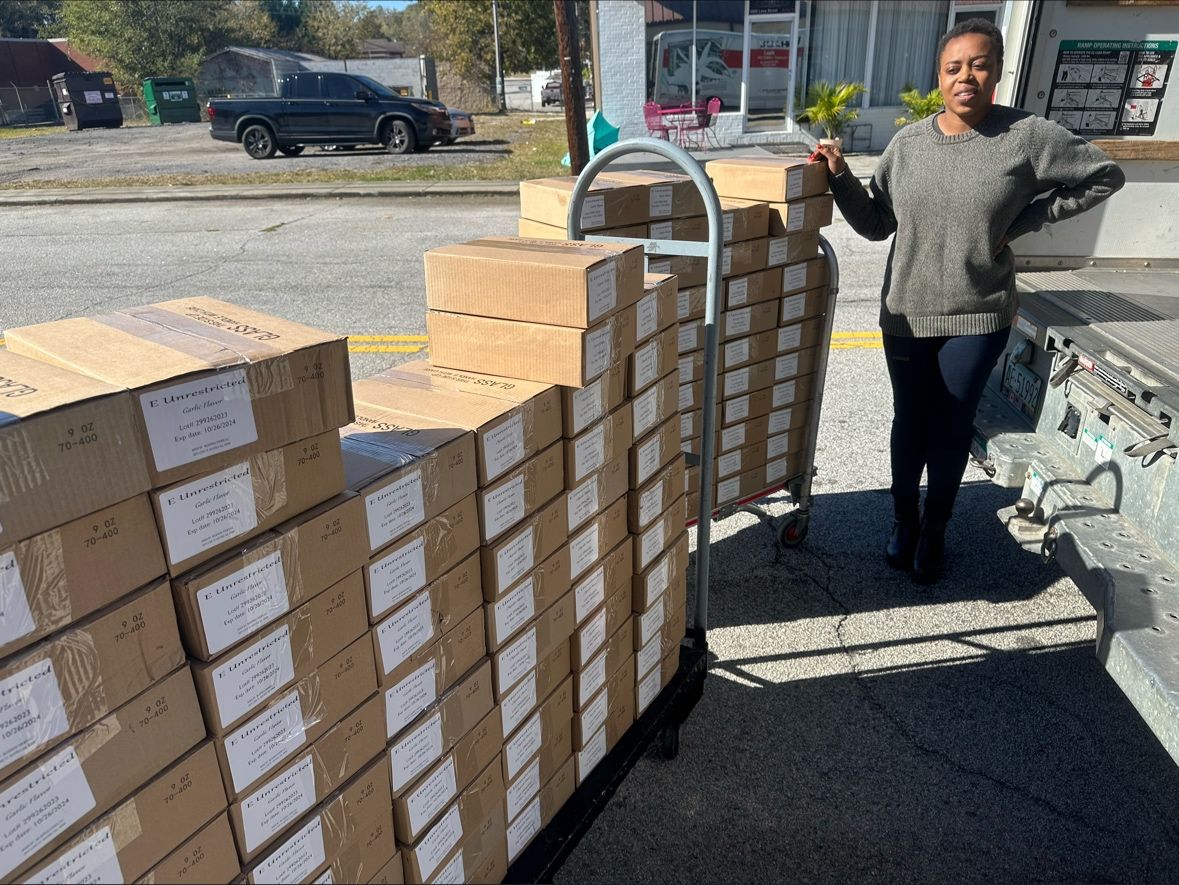
Partnered with Everlasting Love Fulfillment (ELF) for warehousing, pick-and-pack, and shipping. Negotiated service agreements, resolved billing disputes, and maintained fulfillment accuracy through the full product lifecycle.
Retail Placement
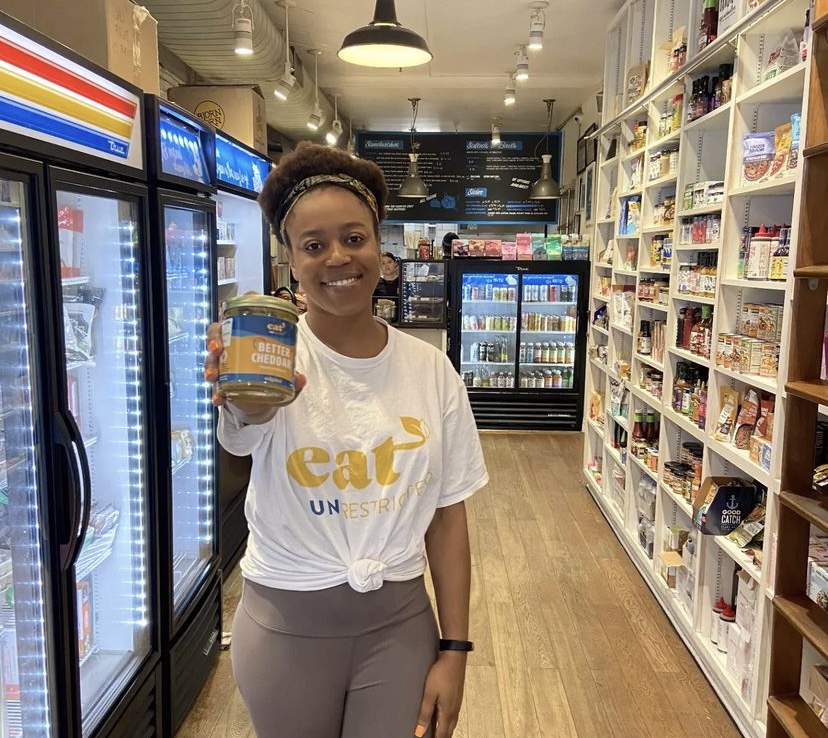
Secured distribution across 4+ states
Pitched and placed Better Cheddar in independent retail stores across more than four states. Managed buyer relationships, sales materials, and distributor onboarding from outreach to shelf.
Packaging & Design
Designed for retail and wholesale distribution
Executed legal agreements with VinePKG (Veritivcorp). Directed packaging design, shifting from 12-unit to 6-unit case configurations for wholesale viability. Provided jar specs and samples to the design team.
Finance & Legal
Business planning, grants, and investment
Built a full business plan with executive summary, market analysis, competitor SWOT, and 12-month cash flow projections. Secured $15K in grants and $25K in angel investment with a $100K+ opportunity pipeline. Managed W9, insurance, and loan documentation.
Marketing & Brand
Agency management and content strategy
Evaluated Brockberry Branding's competitor analysis and expanded marketing plan. Led agency briefings on psychographic and demographic research strategy. Hired and managed a social media assistant for content creation and blog production.
Digital
Led website development end-to-end
Managed a developer and designer to build the brand's e-commerce and marketing site — setting requirements, reviewing builds, and coordinating revisions throughout.
Expo West 2024 — Deep Dive
Taking Better Cheddar to the national stage
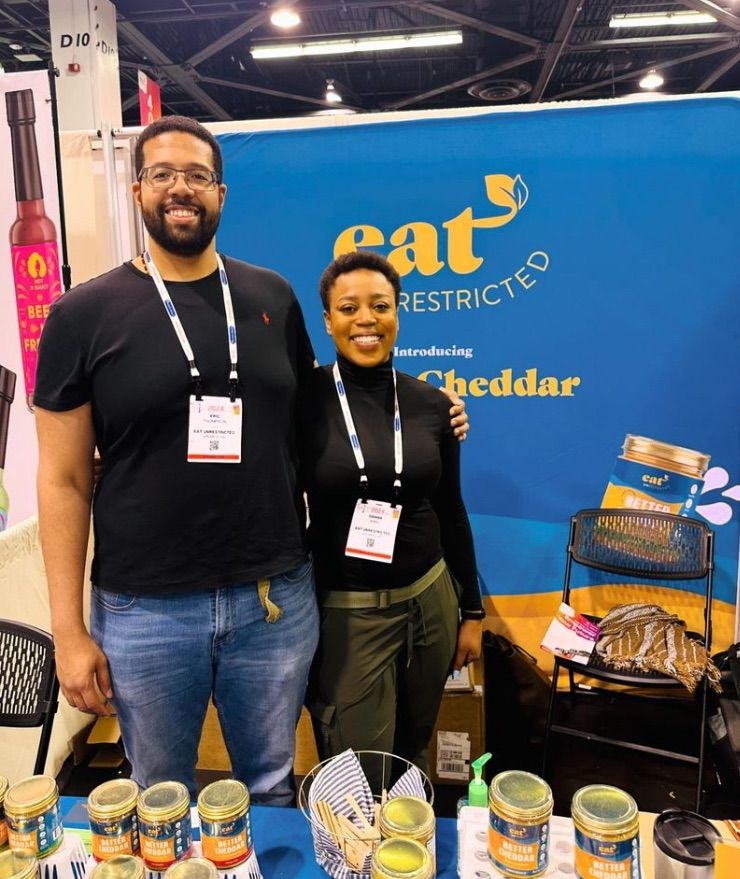
Natural Products Expo West is the largest natural products trade show in the world. Most brands spend six figures just to exhibit. Through strategic resourcefulness — securing the Georgia Grown program booth and building a volunteer team — we showed up on the national stage at a fraction of the cost.
$100K+
saved in exhibitor fees by securing our booth through the Georgia Grown program and recruiting volunteers — costs that other vendors paid out of pocket to participate in the same show.
How it came together
1
Secured booth through Georgia Grown — saving $100K+
Applied and was accepted to the Georgia Grown trade program, which provided exhibitor access at Hall D, Booth 3899 — a slot that would have cost six figures independently. This single decision made national trade show presence financially viable.
2
Managed exhibitor onboarding and digital visibility
Completed the New Exhibitor Application and onboarded all product data to the New Hope Product Portal (Pinto) — the platform buyers use to discover and evaluate brands before the show floor opens.
3
Coordinated all booth logistics and shipping
Managed the full logistics chain for shipping booth materials and product samples to the Anaheim Convention Center, coordinating timing and setup requirements without a dedicated logistics team.
4
Recruited and briefed a volunteer team
Found and coordinated volunteers — a key cost-saving move that eliminated staffing fees. Managed badge pickup logistics, scheduled arrival times, and briefed each volunteer on Better Cheddar's key story: vegan, allergy-friendly, nut-free, soy-free, clean label.
5
Pitched Sprouts category management team directly
Presented Better Cheddar at Sprouts' Innovation Discovery Event. Completed the new vendor submission for the Forager program and coordinated product sample delivery to interested buyers.
"We walked the floor of the world's largest natural products show, pitched national buyers, and kept the lights on — because we found every legitimate shortcut available to us."
Photo Gallery
On the ground
From farmers market demos to the Expo West floor.
The Wind-Down
Why we sunset — and why it matters
An honest account
In 2024, Dianna's Foods was intentionally wound down. Despite achieving real commercial traction — multi-state retail placement, five-figure revenue, a trade show presence, and institutional investment — the business ran out of operating capital. The core economic challenge was manufacturing cost: we could not reduce the cost to produce Better Cheddar to a level that created sustainable margin at the price points the market would bear. Rather than continue burning resources without a clear path to unit economics, we made the deliberate decision to close.
This is not a footnote — it's a central part of the story. Knowing when to stop, how to wind down responsibly, and what to extract from the experience are skills as valuable as knowing how to launch. Every phase of this business was a masterclass in real-world operations, and the lessons from the wind-down are as applicable to the next venture as anything that came before it.
Lessons Learned
What three years of building taught us
01
Unit economics first — always
Revenue and retail placement matter, but if the cost to manufacture doesn't leave room for margin, no amount of sales volume fixes the model. Solving unit economics early is non-negotiable in CPG.
02
Resourcefulness is a competitive advantage
Securing the Georgia Grown booth and building a volunteer team gave us a $100K+ edge over competitors at the same show. Finding creative alternatives to expensive defaults is a genuine, transferable skill.
03
Validate before you scale
Hundreds of farmers market conversations gave us signal on what resonated before we spent on trade shows or retail pitches. Real customer feedback is the most valuable research available to an early-stage brand.
04
A "no" is market data
Sprouts' decline citing low movement of sauces in their Forager centers wasn't a rejection — it was clear signal about channel fit that redirected our retail strategy toward stronger-moving buyers.
05
Vendor accountability is a skill
Managing co-packers, 3PLs, packaging partners, and agencies as the primary decision-maker required clear contracts, documentation, and the confidence to dispute errors — skills that transfer directly to any leadership role.
06
Knowing when to stop is wisdom
Sunsetting the brand was a decision, not a failure. Recognizing when continuing without a path to sustainable margins would only deepen losses — and choosing to close cleanly — is as important a founder skill as launching.
Reflection
What this demonstrates
Full operational range
This work spanned every business function — product, ops, finance, legal, marketing, digital, and sales — demonstrating the ability to lead across disciplines and deliver results without departmental support.
Strategic resourcefulness
Saving over $100K at Expo West through program partnerships and volunteer coordination is a concrete example of finding high-leverage, low-cost solutions under real constraints — a mindset that applies well beyond CPG.
Maturity in the full cycle
From ideation and food science through retail placement, trade shows, investment, and a responsible wind-down — this is a complete business lifecycle. Understanding every phase, including how to close, is a level of founder experience that goes well beyond a launch story.